BOOKS 2022 #Wrestling
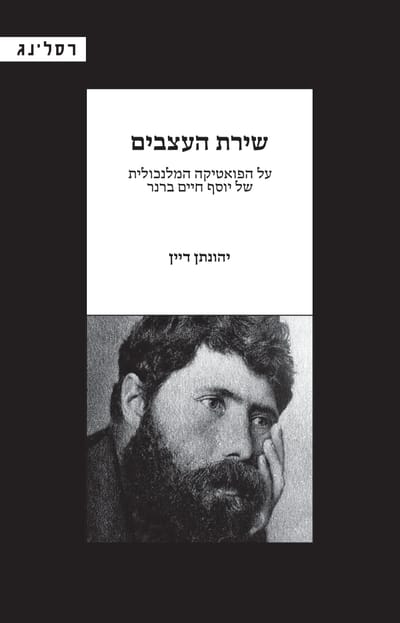
Brenner's place in the Hebrew story tradition is a place of shadows. A place of others, sorrow and hard truth. both in the short and charged plot of his life and in his literary work,
Read More
The appearance of the book in 1989 was considered an event in the space of critical thought - few books have equaled this achievement. In an age that eulogizes and celebrates the disappearance of the super-narrative
Read More
The collection of articles invites researchers who have contributed from the fruit of their pen in honor of the winner of the Israel Prize and member of the National Academy of Sciences, Prof. Yoram Billo, who also contributed his own article
Read More
Is it possible in today's Germany - eight decades after Hitler came to power - to have a nationalist-populist right that has no ideological affinity with National Socialism?
Read More
It is impossible to understand ourselves without the concept of time. But what is time? Why is it so fundamental to the meaning of our lives?
Read More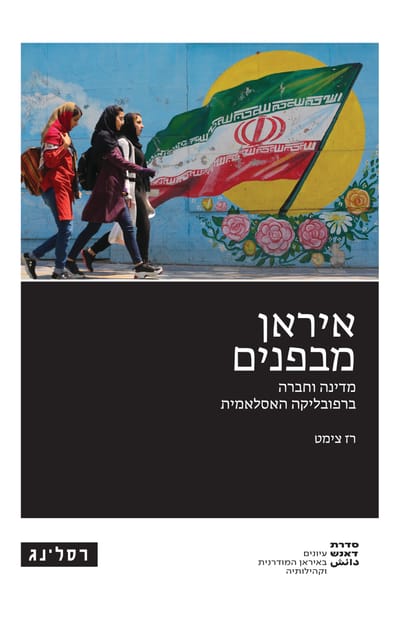
State and Society in the Islamic Republic. In recent years, Iran has become one of the most talked about issues in Israeli public and political discourse. Establishing its regional influence, its support for terrorist organizations and its nuclear armament have made the Islamic Republic an issue
Read More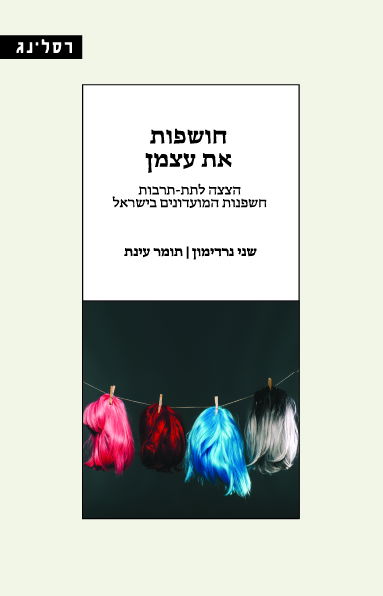
A glimpse into the subculture of strip clubs in Israel. What's really going on in strip clubs in Israel? Where does the idea of being a stripper come from and what does a shift at the club look like?
Read More
Julia Kristeva visited Israel in 2006. At that time, Hamas came to power in the Gaza Strip. Yitzhak Binyamini sought to take advantage of this political context to raise thoughts with Kristeva
Read More
On the Jewish leaderships in Slovakia and Hungary during the Holocaust. In the spring of 1944, Hungarian Jews boarded masses on trains that took them to an unknown destination. In the fall of 1944, the remnants of Slovak Jewry were also sent to the same destination. The Jews, for the most part, did not know what to expect.
Read More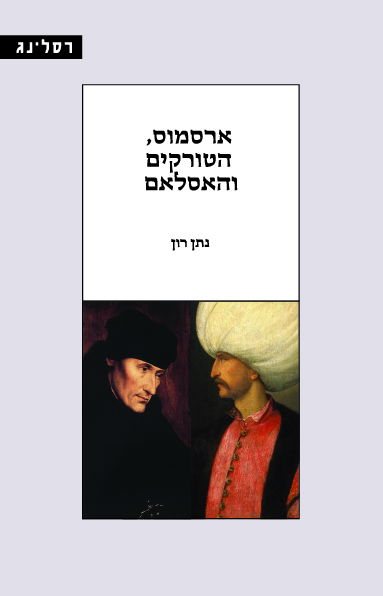
The glorious scholar Erasmus of Rotterdam (1536-1466), "Prince of the Humanists", known as the critic of the ecclesiastical establishment and the witty author of "Praise for Stupidity", also has another and lesser known side.
Read More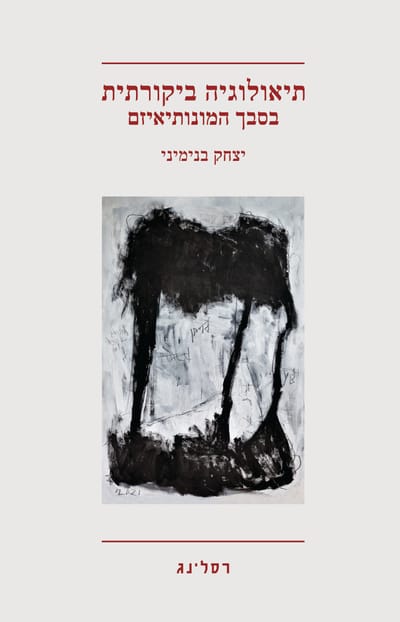
The book focuses on Yitzhak Binyamini's theological experiments in the last decade since he published the book Laughter of Abraham: An Interpretation of the Book of Genesis as Critical Theology.
Read More